Google’s speaker lineup is smaller than Amazon’s, but what is currently sold works well for anyone who prefers Google Assistant over Alexa or already runs an Android household. Here are the two current Nest speaker models and how to decide between them.
What to look for
Decide whether you need one speaker per room for basic voice control and timers, or whether you want genuinely good music playback, since the size and price difference between these two models maps directly to that choice. Both work with Google Home routines and Chromecast built-in for casting from your phone.
1. Google Nest Audio
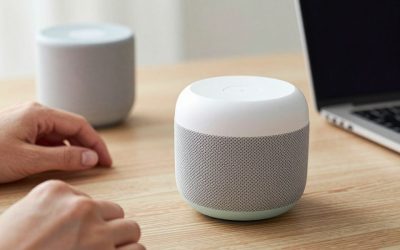
The Nest Audio is Google’s main speaker for sound quality, with a 75mm woofer and 19mm tweeter that multiple reviewers note sounds noticeably better than the comparably priced Amazon Echo. It handles voice commands, timers, and smart-home control through Google Assistant, and pairs well with a second unit for stereo sound in a living room.
2. Google Nest Mini (2nd Gen)
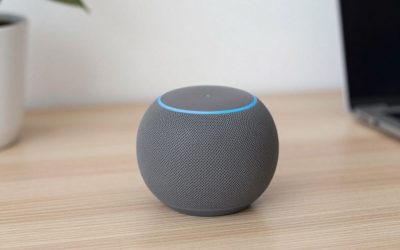
The Nest Mini is the budget, compact option, meant for secondary rooms where you mainly want voice control, timers, and quick music playback rather than a primary listening experience. It is small enough to tuck on a shelf or nightstand and still carries full Google Assistant functionality.
Check Nest Mini (2nd Gen) on Amazon
Buying tip
If you want a touchscreen in addition to voice control, Google’s Nest Hub line (not covered here) adds a display, but if you specifically want a speaker-only device, these two remain Google’s current lineup. Mixing one Nest Audio in the main living space with one or two Nest Minis in secondary rooms is a common, cost-effective setup.
3. Google Nest Hub (2nd Gen)
If you’re choosing between Google speakers and also want a screen, the Nest Hub (2nd Gen) is worth considering alongside the Nest Audio and Nest Mini. It has a genuinely capable speaker for its size — noticeably fuller than the Nest Mini — plus a 7-inch display useful for recipes, video calls, photo frame duty, and even a sleep-sensing feature using radar instead of a camera, which addresses the privacy concern some people have with camera-equipped smart displays. It’s a reasonable “best of both worlds” pick if pure audio quality isn’t your only priority.
Check Google Nest Hub (2nd Gen) on Amazon
Buying considerations
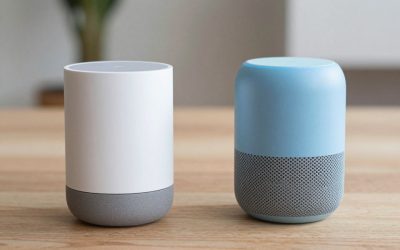
Google’s current speaker lineup is deliberately narrow compared to Amazon’s Echo range or Sonos — essentially the Nest Mini for a cheap, compact option and the Nest Audio for genuine room-filling sound, with the Nest Hub line adding a screen if you want one. This means the decision is simpler than other ecosystems: budget and room size really drive the choice more than feature differentiation. If multi-room audio matters, note that Nest Audio and Nest Mini speakers can be grouped together through Google Home for synced playback across rooms, and both integrate cleanly with Chromecast-enabled TVs and other Google-ecosystem devices.
FAQ
Why does Google only sell two true speaker models?
Google has kept its speaker lineup intentionally focused rather than offering many price tiers like Amazon; the Nest Mini and Nest Audio cover the budget and mid-range use cases, with smart displays like the Nest Hub covering higher price points with added screen functionality.
Can I use a Nest speaker with a non-Google smart home device?
Yes, Google Assistant supports a very wide range of third-party smart home brands (lights, plugs, thermostats, locks) through the Google Home app, similar in scope to Alexa’s device compatibility.
Is older Google Home hardware still supported?
Discontinued older models like the original Google Home still receive basic support, but new purchases should stick to the current Nest Audio/Nest Mini lineup for the latest features and continued long-term software updates.
Why Google keeps its speaker lineup small
Compared to Amazon’s wide range of Echo models at different price points, Google has consistently kept its dedicated speaker lineup narrow, focusing engineering and marketing attention on fewer SKUs. This makes shopping simpler but offers less granularity if you want something between the compact Nest Mini and the fuller-sounding Nest Audio — there’s no true mid-tier Google speaker the way Amazon offers the Echo Dot, Echo, and Echo Studio as three distinct tiers. For buyers who want more audio options within the Google Assistant ecosystem specifically, third-party Google Assistant-compatible speakers from brands like JBL exist, though they’re less seamlessly integrated than Google’s own first-party hardware.
FAQ
Are there third-party speakers that work with Google Assistant?
Yes, several speaker brands build in Google Assistant support directly, offering more variety in sound profile and price than Google’s own narrow first-party lineup, though setup and smart home integration can be slightly less seamless than genuine Nest hardware.
Does Google plan to expand its speaker lineup?
Google’s product strategy has shifted over the years between expanding and consolidating its hardware lineup; checking Google’s current store listing directly is the most reliable way to see what’s actively offered at any given time.
Can I use a Nest speaker without a Google account?
No, initial setup and most ongoing functionality require a Google account, since voice recognition, personalized responses, and smart home control are tied to your account across Google’s ecosystem.
Pairing a Nest speaker with existing Google devices
If you already own a Chromecast, Google TV device, or an Android phone, a Nest speaker integrates with minimal extra setup — casting audio from apps like YouTube Music or Spotify works the same way it does to a Chromecast, and voice commands through the speaker can control other Google-connected devices in the home without additional configuration. This tight existing-ecosystem integration is often the deciding factor for buyers who are already invested in Google hardware rather than starting from scratch with Alexa or Sonos.
Final thoughts
Buy the Nest Audio for any room where you actually listen to music, and the Nest Mini for rooms where you mainly want quick voice commands. Both integrate identically with Google Home routines, so the choice comes down to speaker quality versus price.

Write Your Review
No reviews yet. Be the first to share your experience!