“Smart plug” and “smart outlet” get used almost interchangeably in product listings, but they’re physically different products with different installation requirements. Getting this wrong before you buy means either returning a product or, worse, realizing you needed an electrician after all.
The actual difference
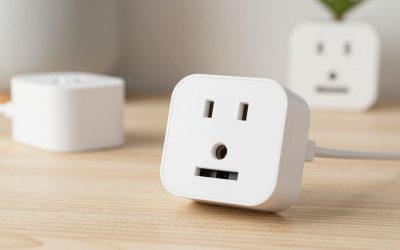
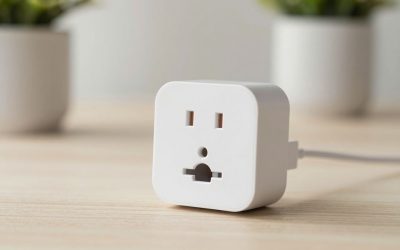
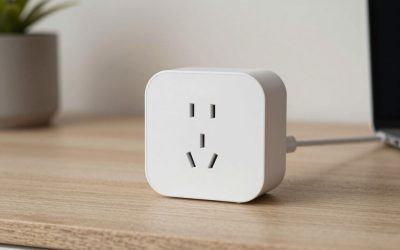
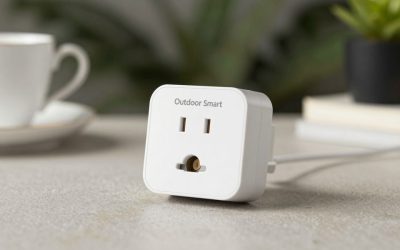
A smart plug is a small adapter that plugs into an existing wall outlet — you plug the smart plug in, then plug your lamp or appliance into it. No tools, no wiring, fully reversible. A smart outlet (sometimes called an in-wall smart receptacle) replaces the physical wall outlet itself, which means cutting power at the breaker and connecting wires, just like swapping any other outlet.
Smart plugs: no installation, fully portable
For renters or anyone who doesn’t want to touch house wiring, a smart plug is almost always the right call. The Amazon Smart Plug is the simplest option for an Alexa household, while the TP-Link Kasa Smart Plug line offers a similar experience with broader multi-assistant support.
Check Amazon Smart Plug on Amazon
Check Kasa Smart Plug on Amazon
Smart outlets: permanent, cleaner look, but real wiring work
A smart outlet like the Leviton Decora Smart Wi-Fi Outlet sits flush in the wall, so there’s no bulky adapter sticking out and blocking the neighboring outlet. The trade-off is installation — this is a job for someone comfortable working with household electrical wiring, or for an electrician, not a five-minute plug-and-go setup. It’s also a bad fit for a rental unit you don’t own.
Check Leviton Decora Smart Outlet on Amazon
Installation time and risk
A smart plug takes about as long to set up as plugging in a phone charger, plus a couple of minutes in an app to connect it to Wi-Fi. A smart outlet means cutting power at the breaker, removing the existing outlet, matching up wiring, and testing it before closing the wall plate back up. If that’s not work you’ve done before, it’s worth paying an electrician rather than guessing — miswired outlets are a real fire and shock hazard, not just an inconvenience.
Energy monitoring on either option
Both formats are available with energy monitoring if you want to track usage, not just on/off state. The TP-Link Kasa KP125M adds monitoring to the plug format, while some smart outlet models offer the same tracking built into the in-wall unit. If energy monitoring is the main feature you’re after, it’s available either way and shouldn’t be the deciding factor between plug and outlet.
Appearance and bulk
Plugs are the visible trade-off — they stick out from the wall, sometimes block the second outlet in a two-gang plate, and come in whatever color the manufacturer chose. An in-wall outlet looks completely normal, matching your existing switch plates and faceplates, which matters more in a finished living space than in, say, a garage or laundry room where appearance is irrelevant.
Which one do you actually need
If you want to control a lamp, fan, or coffee maker without any permanent change to your home, buy a smart plug — it’s cheaper, faster to set up, and goes with you if you move. If you’re already renovating, building new, or you own your home and want outlets that look factory-installed with no visible adapter, a smart outlet is worth the extra installation effort. Most households never actually need the in-wall version.
Outdoor use
If you’re trying to control something outside — string lights, a fountain pump, a holiday display — look specifically for a weatherproof smart plug rated for outdoor use rather than either of the indoor products above. Indoor smart plugs and outlets aren’t sealed against moisture, and using one outdoors is both a safety risk and likely to fail within a season of weather exposure.
A note on load limits
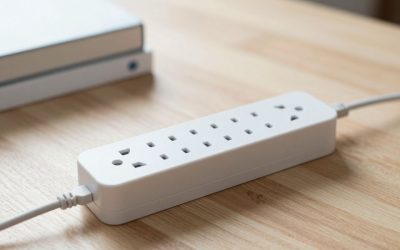
Both plugs and outlets have a maximum wattage or amperage rating, usually printed on the device itself. Space heaters, window AC units, and other high-draw appliances can exceed what a basic smart plug is rated for, so check the rating before assuming any smart plug works for anything you’d normally plug into that outlet.
Mixing both in the same home
There’s no rule against using plugs in some rooms and outlets in others. A common pattern is plugs for lamps and small appliances throughout a rental, combined with one or two in-wall outlets in a workshop or garage the owner has already decided to renovate anyway. Treat the decision room by room rather than picking one format for the entire house.
Final thoughts
Default to a smart plug unless you have a specific reason not to. It solves the same problem — scheduling and remote control for whatever’s plugged in — without the wiring, the risk of a botched install, or the commitment if you decide you don’t like it after all.
Write Your Review
No reviews yet. Be the first to share your experience!